DOWNTOWN LUBBOCK

Four Reasons Lubbock Needs More Density

Growth, gentrification and strained local budgets can be addressed by changing the city's current development pattern.
Published 08/25/2026 at 7:21pm

Table of Contents

The Topic of High Density Housing

Almost any major decisions in regards to infrastructure and development in a city as large as Lubbock is always going to create some controversy. That being said I think it’s best to take it with a grain of salt from those who think that housing isn’t in demand in Lubbock’s Downtown. I personally believe that with continued effort and investment, Downtown Lubbock is already turning into a destination for people who want a city vibe without the huge city price tag. For example one of the local news outlets recently reported that one of the luxury rental high-rises downtown has a year wait list. So it’s pretty obvious that certain types of housing with urban amenities even in the historic core of Lubbock are a hot commodity. In my opinion a city like Lubbock could greatly benefit from a dense downtown and now with more high-rises being built in the Tech Area. The topic of high and medium density housing is going to be a much debated issue of discussion. Nonetheless, below are my four main reasons why Lubbock needs more density in it’s historic core.

Lubbock will Continue to Sprawl

New data from the Lubbock Economic Development Alliance (LEDA) has projected that the Hub City could now grow to 500 thousand strong by 2060. And thanks to the ongoing construction of Loop 88 and numerous road projects on the periphery of the current city limits. The coming decades will see accelerated growth of the southern and western portions of Lubbock county. That being said; according to a draft of the city of Wolfforth’s comprehensive plan. The formerly incorporated community has added 3,500 people since 2020, making it the third largest city on the South Plains. More than likely; the Lubbock city limits and it’s surrounding satellites will grow and sprawl into the second largest metropolitan area of all West Texas behind El Paso. Not to mention that all large Texas cities are giants per square mile when compared to other cities nationally of the same population. So it’s safe to say that Lubbock’s current development pattern of suburban sprawl will not be going anywhere anytime soon. Medium and high density housing in downtown can act as a counter balance to the continued construction of subdivisions and large road projects on the outer edges of the city. Helping the city as a whole by keeping commute times down, and maintaining a sense of upward mobility and progress for many of the city’s residents.

Density if Done Right Increases Walkability

“Eyes on the street” is a philosophy coined by Jane Jacobs in the 1960’s when the core of American cities were starting to completely decay into ghost towns. At that time American downtowns were under constant assault from different forces that meant to drive investment and development away from the central business districts. The postwar boom of the 1950’s led to an explosion in suburban development and highway projects that cut many cities in two. Culminating in the ‘urban renewal’ projects that crammed many minority low income residents into large public housing units. While the newly built suburbs became places almost exclusively for wealthier white residents. Fast forward to the latter decades of the 20th century and many cities started to rethink how their urban cores should function. After a cultural renaissance in big city downtowns, more investment started to pour back in. Soon enough more dense housing had to be built to accommodate the demand for housing in these revitalized areas. Boosting tax revenue for cities to entice employers to set up shop in the urban core through direct subsidies, tax incentives and grant programs. These dense developments then and now allow residents to work, shop, play and worship all in one area of the city. Allowing residents to rely less on owning a car, and only using ride share or public transit to move outside the most walkable areas of the city.

Lubbock will Need to Expand it's Tax Base

Concerns from diminished sales tax revenue from 2025, inflation, rising costs and tax exemptions approved by voters over the past few years has strained local budgets. To maintain a high quality of life for all of the city’s residents. As Lubbock continues to grow the city will need to expand it’s tax base. Growing cities need parks, transit, health, police and fire departments to be maintained and funded. Dense city developments allow cities to increase their tax revenue more per acre than spread out low density type housing. Boosting tax revenue for these cities to support more city services like improved public transit, arts/cultural districts and recreational and health programs.

Lubbock Downtown Needs to Progress into the Future

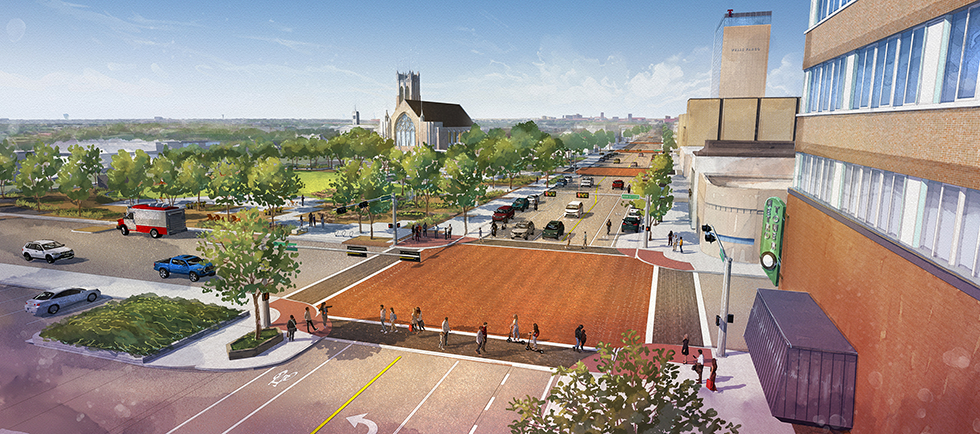
After the 1970 tornado tore a path of destruction that stretched from north, east and downtown Lubbock. Lubbock’s sprawl to the south was spurred even more after the opening of the South Plains Mall. Those factors combined with the size of downtown and along with increasing divestment over the decades by the city and private capital. Downtown Lubbock fell into degradation and disrepair. Believe it or not Downtown Lubbock is the same size per square mile as Downtown Houston. And Houston we all know dwarfs Lubbock in economic power and population. So there’s one reason private investment has been lacking. The next logical solution to this is public investment, and now thankfully after many previous attempts over the decades. The road bond passed in 2024 will pump $17 million into Broadway for redevelopment. Which I’m sure will give more reassurance to investors that the city is willing to commit long term to the revitalization of downtown.

Time to Move Forward

Changing the current zoning regime and creating incentives for developers to build more medium and high density housing in the city’s core. Can go a long way to alleviating much of the economic and financial pain that has afflicted Lubbock’s central business district over the past 50 years. Encouraging our leaders to adopt the polices necessary, that allow incremental dense development to be prioritized in the historic center of Lubbock’s Downtown. Along with unprecedented growth and change coming to Lubbock quickly over the next few decades. We as a community can take steps now to move Lubbock toward a future where our downtown and it’s surrounding neighborhoods are more dynamic, resilient, walkable and stronger than ever before.

Proudly Human Made Content: Every word on this page is 100% written, edited, and fact-checked by our human team. All intellectual property rights, including copyrights, trademark rights and database rights with respect to the information, texts, images, logos, photographs and illustrations on EmmanuelQ.com with respect to the layout and design of the website are protected by intellectual property rights and belong to EmmanuelQ.com or entitled third parties. The reproduction or making available in any way or form of the contents of the website without prior written consent from EmmanuelQ.com is prohibited.
CENTRAL LUBBOCK

Three Ways Texas Tech is Leading Lubbock in Walkability

City growth, public safety and affordability concerns all intersect with a new push for walkability.
Published 07/09/2026 at 9:48 pm
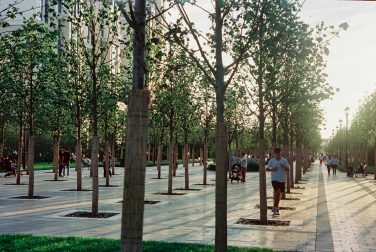
A lively urban park in Astana, Kazakhstan, captured during a sunny day with people enjoying outdoor activities.

Table of Contents

Disappearing Sidewalks

If you’ve ever stepped foot outside of your car to get from one place to another in Lubbock Texas. The last thing you want to do is walk. It’s either too hot, too cold, too windy or too dusty to hoof it of any significant distance in this city. Lubbock like many Texas cities is known for being spread out and car centric. Making Texas Tech’s bold new initiative of creating a more walkable campus even more noteworthy.

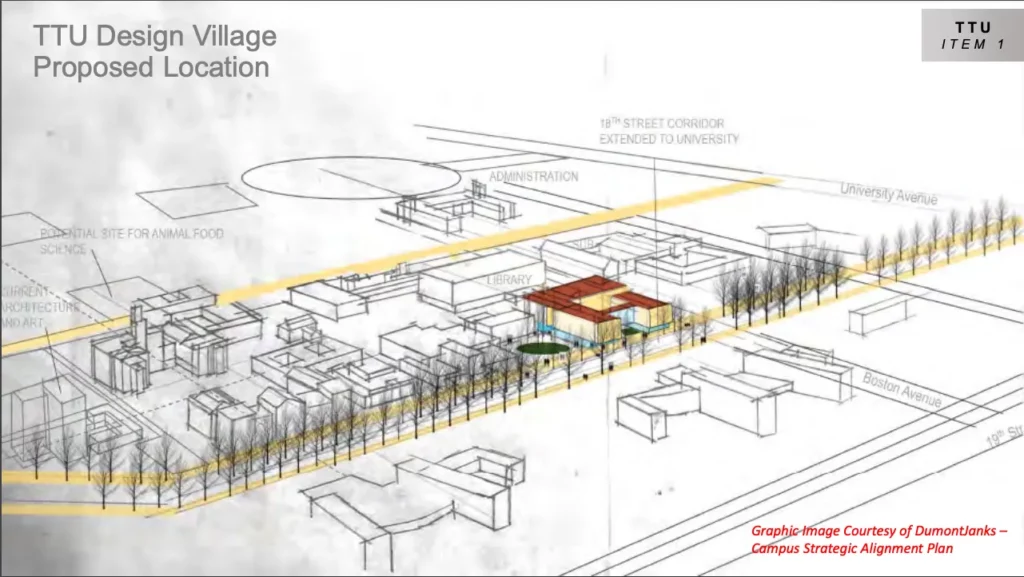
For some background, in 2024, Texas Tech adopted a new strategic alignment plan. The university is proposing a slew of new projects aimed at qualifying the institution for AAU status. AAU is the Association of American Universities, which is a top-tier invite only league of public and private research universities. Two of the projects have already been green lit. The first one is primarily focused on consolidating multiple architecture, engineering and construction colleges into a design school housed in one building; known as the “The Design Village”. While the other is an expansion of the facilities for the college of agriculture and natural resources. Both of these projects are advancements in their own right, however as the growth of Texas Tech continues to be the driving force of economic change in the historic core of Lubbock. There is another set of projects that have the potential to influence the region and Lubbock as a whole in one of the most important areas of public safety.

Walkability.

Like I said earlier the last thing anyone in Lubbock wants to do is walk, it’s usually the last resort option for most trips. Good news for you the major projects on walkability would take place on Tech campus where the university would build, maintain and upkeep the walkways. As a whole, the historic core of Lubbock is already one of the more walkable areas of the city, with narrower streets, wider sidewalks and a culture of Tech students and locals accustomed to getting around town by foot, bicycle or electric scooter. To clarify, the use of traditional bicycles, electric scooters, ebikes and the like is formally known as ‘micro-mobility transit’. However for the sake of time and cutting to the chase. I like to call everyone who traverses the city outside of a car or large vehicle a pedestrian or ‘walking’. That being said here are the three ways Texas Tech is leading by example in Lubbock with public safety and pedestrians. 

Less Parking Lots with the 'Park First' Mentality

The philosophy driving this new initiative at Texas Tech, is called ‘park first’. Particularly in the central part of campus; the goal is to create an environment that reduces the amount of large parking lots the university uses overall. Encouraging visitors and students to park their cars in one of the outlying garages or parking lots. Then using the university’s shuttle services and walking to get around. One of the best design elements of this new plan is to create campus wide pedestrian corridors with a large number of trees planted on either side. Helping to cool the city down with shade and creating more habitat for local wildlife. 15th Street and 18th Street themselves in central campus would be converted into the pedestrian corridors. And would most likely be the main areas for pedestrian traffic and the project’s emphasis.

Redesigning the Campus for Walking

Running East to West and both framing either side of the Student Union Building and the Library. 15th Street and 18th Street would both serve as the main arteries for foot traffic connecting central campus to South Overton to the east and into Urbanovsky Park and the Texas Tech Basketball Arena to the West. Hopefully with the goal of creating a stronger pedestrian link to one of the university’s most visible street corners. The lengthening of 18th Street is being proposed to connect the campus to University Avenue. In addition to the pedestrian pathways, the portion of campus facing University Ave. between 15th and 19th Street; the plan also suggests building a parking garage, a visitor center and a second recreational facility for students. This southeastern section of the university’s footprint, despite being surrounded by two major roads, a prominent city park, a large office tower and within the next few years two high rises for students. Has been left almost fully undeveloped by Texas Tech and offers a great opportunity for the university. To not only work towards it’s goals to qualify for AAU status. But also to promote a new development pattern in central Lubbock that focuses on more pedestrians and less cars.

Texas Tech Strategic Alignment 2024

Changing Central Lubbock

Much like the world over in big city downtowns where vehicle traffic is prohibited. Texas Tech is recognizing that the entire Lubbock campus doesn’t have to prioritize vehicle traffic. Which is a model that I personally believe should be implemented citywide. Walkability and safety for pedestrians in the historic core of the city will be crucial to the growth of Lubbock in a future where more students and residents are tightening their belts to offset the high prices of car ownership and living expenses. By maintaining an urban feel in an affordable city like Lubbock without the huge city price tag. Stakeholders in our community can help create an environment that allows businesses, individuals and families to thrive in a city off the beaten path; working towards a brighter future in a place that is striving to live up to it’s full potential. With much of the progress Lubbock is seeing in downtown over the next few years there is no better time to focus more on walking than driving than now.

Proudly Human Made Content: Every word on this page is 100% written, edited, and fact-checked by our human team. All intellectual property rights, including copyrights, trademark rights and database rights with respect to the information, texts, images, logos, photographs and illustrations on EmmanuelQ.com with respect to the layout and design of the website are protected by intellectual property rights and belong to EmmanuelQ.com or entitled third parties. The reproduction or making available in any way or form of the contents of the website without prior written consent from EmmanuelQ.com is prohibited.
DOWNTOWN LUBBOCK

Six Big Changes Spinning into Downtown Lubbock

The prevailing economic winds of revitalization and redevelopment are starting to converge on Downtown Lubbock.

Published 06/12/2025 at 1:45 am
Close-up of an excavator working on road construction, showcasing the industrial process.

Table of Contents

Lubbock on the Precipice of Change

Suppose we took a huge step back in time. There’s one piece of technology we would see in almost constant use. With the ability to use their energy to keep spinning once they are in motion. Flywheels were used in different variations from spindle whorls to potter wheels and were primarily made out of stone, wood, and then later on metal. These simple devices have continued to help power humanity from the Neolithic era until today.

Fast forward to the 21st Century and this concept of a wheel spinning on its inertia is a great metaphor for inner city communities and areas that have been underfunded or undeserved by choice or by circumstance. If enough community dollars either private or public aren’t prioritized for an area that desperately needs revitalization. The cultural and economic flywheel of that area won’t begin to spin fast enough so that it can spin using its own momentum. Therefore we’ll never see those neighborhoods or sections of the city live up to their potential of job creation, upward mobility, and increases in standard of living.

Now that the dust has started to settle after the 2024 Election. Zooming in on the local level, thanks to the voters approving Prop A; the road bond proposal that will in part, pump $16 million into redeveloping Broadway from Ave Q to Ave E. The subsequent years will bring big changes to Downtown Lubbock. The new makeup of the city council although seemed to send signals in the latter part of 2024 and early 2025 that revitalization and new infill development of the city’s historic core was something to be opposed. Particularly in the residential neighborhoods surrounding Texas Tech to the south and east. Which I colloquially call the ‘Tech Area’.

Downtown Lubbock and Lubbock County itself are on the precipice of momentous change. Not only was the passage of the road bond project a message sent by the voters that downtown revitalization and Lubbock’s growth overall should be prioritized. There has also been much progress made in new redevelopment projects in Downtown Lubbock and the Tech Area, that once completed. Could easily cement Lubbock’s status as a destination that will continue to attract investment and tourism from across the region and the rest of Texas.

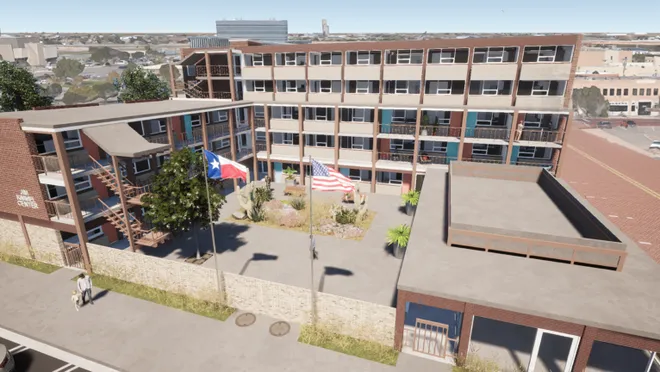
The Renovation of the Jim Kimmel Center

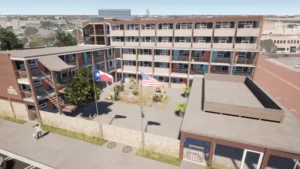
The first of these ongoing projects and others yet to break ground include the renovation of the Jim Kimmel Center into affordable housing apartments in the heart of downtown.

Rendering of Jim Kimmel Center renovations. 

Pickering Park and Broadway Market

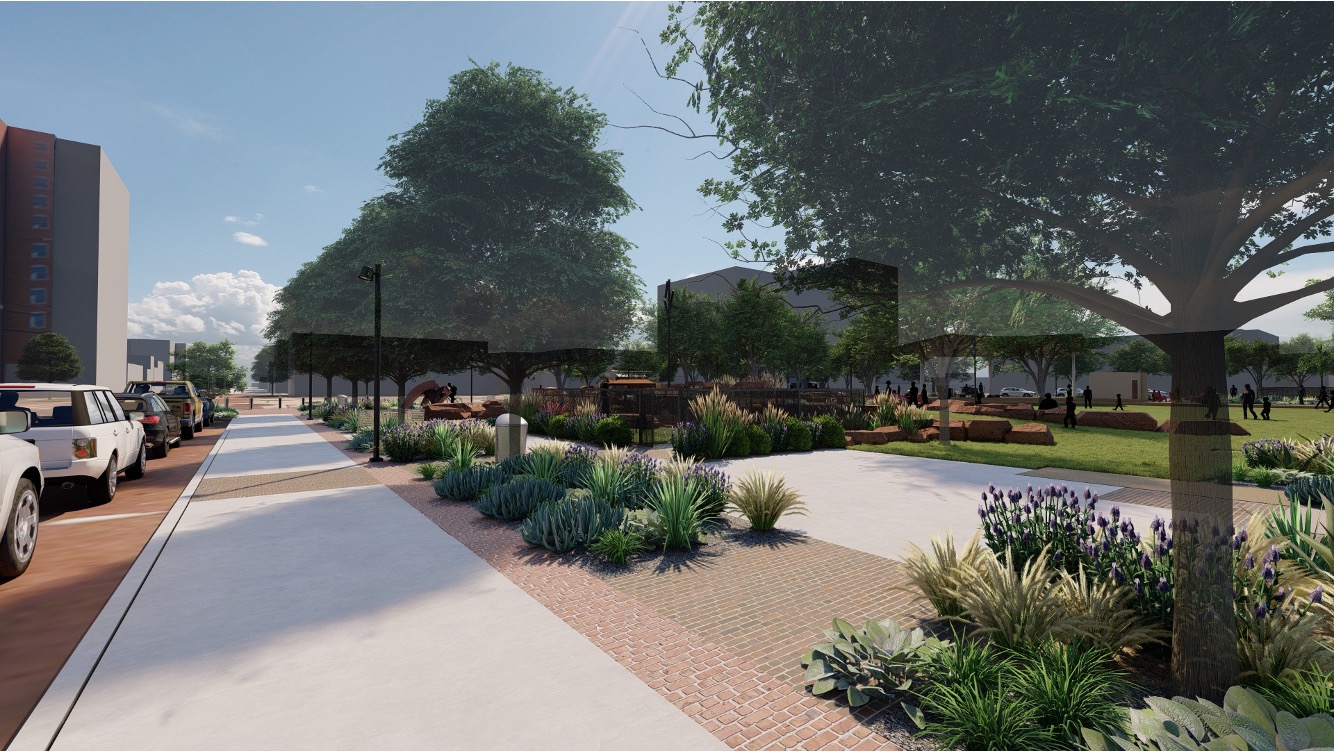
The second is the Downtown Lubbock Park which is almost 80% funded and is in the final stages of fundraising to push the funding portion of the project to completion.

Rendering of Downtown Lubbock Park/Downtown LBK
Rendering of Downtown Lubbock Park/DowntownLBK

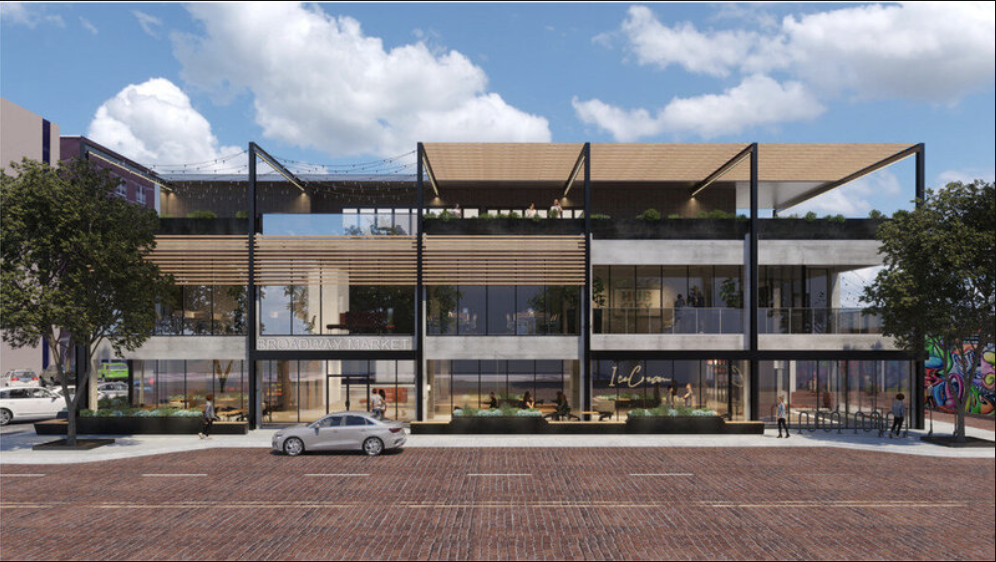
The third is the revamping of the former Community Health Center of Lubbock building into a mixed-use retail, restaurant and bar space dubbed the Broadway Market. Presumably the goal here is to help anchor downtown’s main thoroughfare as a center for shopping, dining and nightlife. 

Broadway Market preview in Downtown Lubbock/BroadwayMarketLBK

South Overton and Tech Terrace

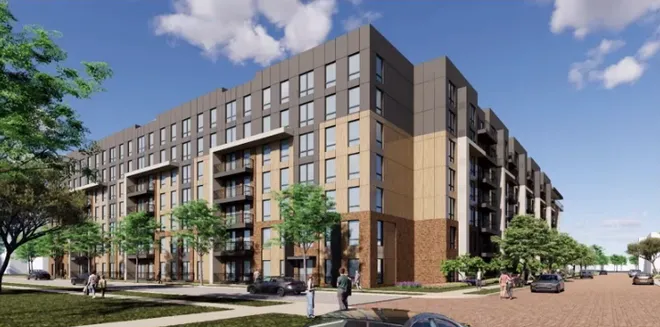
Then lastly, the high-rise student housing projects outside of downtown in the Tech Area will undoubtedly make an impact on the historic core of the city. Both projects made headlines after first being opposed by neighborhood groups. Leading to contentious debate about whether high-rise dense housing should allowed to be built in older neighborhoods zoned primarily for single-family homes. Nonetheless, the projects were approved with the South Overton project already breaking ground this past winter and due for completion in summer 2027.

'Tech Area' South Overton Student Housing. Public Records.
‘Tech Area’ South Overton Student Housing. Public Records.

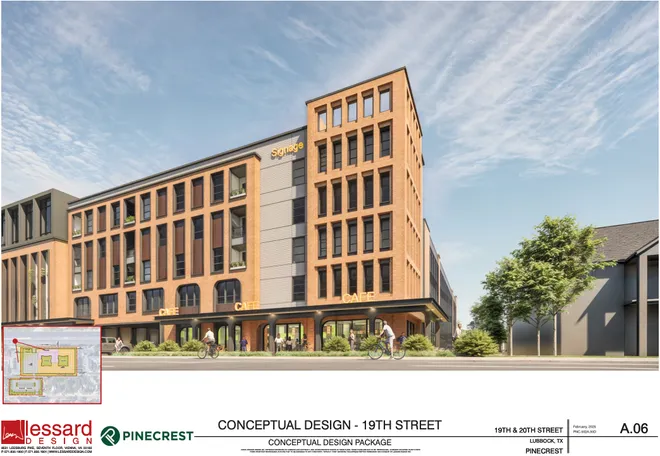
The Tech Terrace project is slated for construction in spring 2026.

'Tech Area' 19th Street High Rise. Tech Terrace Neighborhood Association.
‘Tech Area’ 19th Street High Rise. Tech Terrace Neighborhood Association.

These projects along with the Broadway Revitalization project set to begin construction in 2026. Lubbock’s historic core will look and feel a whole lot different in the years to come. Much like how it takes a village to raise a child, one weak spin of the flywheel won’t allow it to spin on its own. So the hope is that when more projects are completed, Downtown Lubbock can continue to spur public and private investment into an area of the city that has had its fair share of hard times.

Broadway Avenue Redevelopment. Courtesy of City of Lubbock
Broadway Avenue Redevelopment. Courtesy City of Lubbock

Regardless of where you lie on the scale of preserving a city’s historic charm and character or growth at all costs. There is one thing for certain that seems to be on the back of everyone’s mind. Living in an area of the country that has become synonymous with keeping things the same. It’s a breath of fresh air to know there is one place where change seems to be constantly in the air like dust in the West Texas wind. And that’s right here in our very own Hub City of Lubbock, Texas.

All intellectual property rights, including copyrights, trademark rights and database rights with respect to the information, texts, images, logos, photographs and illustrations on EmmanuelQ.com with respect to the layout and design of the website are protected by intellectual property rights and belong to EmmanuelQ.com or entitled third parties. The reproduction or making available in any way or form of the contents of the website without prior written consent from EmmanuelQ.com is prohibited.
2024 ELECTION

Four Reasons to Support the New Road Bond for Downtown Lubbock

This election cycle Lubbock has the chance to move the city forward in a dynamic way with Road Bond Prop A.
Published 10/30/2024 at 5:00 am
construction, worker, bricks

Table of Contents:

In the Thick of Election Season

It’s no secret that we’re in the thick of election season with large rallies being held in swing states. Political ads are being blasted over the airwaves and voting sites opened throughout the city in grocery stores, schools, and the like.

Living in politically conservative Lubbock and West Texas. You have heard your whole life, probably like myself. That your vote doesn’t matter during the general election. As we know Texas will most indeed be won by the Republican Presidential candidate. And aside from the Presidential race, most state elections are decided by people in big cities and suburbs nowhere near the far-flung communities here on the South Plains and West Texas.

Then I’m sure it would come to surprise you that voters here in Lubbock have a chance to reshape our very own city in a way that many of us never thought possible until recent years.

Proposition A the current Road Bond proposal that is on this year’s ballot; specifically the proposal to devote $16 million to redeveloping Broadway from Ave Q (U.S. Hwy 84) to Ave E.

That being said I think if you considered what is being proposed for Prop A you’d vote YES. 

$16 Million to Redevelop Broadway

$16 million of the bond would be spent to redevelop Broadway in Downtown Lubbock. If I’m not mistaken it could be the city’s largest investment ever in Downtown Lubbock’s road network. If Broadway were to be redeveloped Downtown Lubbock could have the catalyst needed to transition into a destination that attracts investment and tourism from across the region and the rest of Texas.

Downtown Lubbock
Renderings of Project Proposal ‘Prop A’ for Downtown Lubbock

Long-time residents of Lubbock have waited over 40 years for a project like what is being proposed downtown to finally make its way onto the ballot that has a legitimate chance of coming to fruition. Although there are a good bit of detractors who believe Prop A if passed won’t end up benefiting residents near District 1 and District 2.

I personally believe that if the revitalization of Downtown Lubbock is managed correctly. That many people throughout the inner core of the city not just residents in District 1 and District 2 can benefit greatly from a fully revitalized downtown.

Will Improve Access and Opportunity

An improved road network, grants residents near downtown to have better access to city services like the CitiBus and the Mahon Library. Along with job training and career advancement with the former city hall being newly renovated for South Plains College. Not counting the numerous job and economic opportunities being created by a dynamic, vibrant, and growing downtown.

It be wrong for us to think that neighborhoods near downtown wouldn’t benefit from such a proposal. Even though at first glance it seems only certain areas of the city will benefit from newly constructed roads. Those areas of the city won’t reap the benefit of being situated near the historic core of the city that could potentially transform into the engine of growth that powers Lubbock into the latter half of this decade and beyond.

The only way Downtown Lubbock has the potential to do that is through public dollars being invested into downtown. The only way those public dollars end up being invested in downtown is if Prop A passes.

Keeping up with Lubbock's Growth and My Final Thoughts

With all that being said; the rest of the funds will be allocated to areas of the city that are fast-growing and need paved and improved streets. Some of these corridors have already fallen into despair due to that growth and simply can’t meet current traffic demands during peak hours. 

Lubbock isn’t going to stop sprawling out anytime soon, so investment must be made in the areas of the city that need it. At the same time, the historic core of our city shouldn’t be neglected and left to wither on the vine.

One local report last year showed that over $30 million was invested into downtown thanks to a grant program spearheaded by Market Lubbock.

It doesn’t take a detailed analysis to understand that the areas adjacent to downtown are experiencing positive change as well. The improvement project by TxDOT on U.S. Hwy 84/Ave Q has been completed. Making the former section of the highway more pedestrian-friendly with on-street parking, lower speed limits, and bulb-outs.

Along with newly built apartments and hotels nearing completion just across the street in the North Overton and Jackson Mahon neighborhoods. Not to mention the ongoing road improvement project being made to 19th Street (U.S. Hwy 114).

As there has already been plenty of infill development and redevelopment near downtown; the goal here should be to continue to build on that momentum. To strike while the iron is hot if you will.

I hope that the citizens of Lubbock and our leaders can balance both of these needs. I feel this is a good bond package for ALL of Lubbock and since your vote carries more weight at the local level I ask that you please vote YES for the Road Bond Prop A.

All intellectual property rights, including copyrights, trademark rights and database rights with respect to the information, texts, images, logos, photographs and illustrations on EmmanuelQ.com with respect to the layout and design of the website are protected by intellectual property rights and belong to EmmanuelQ.com or entitled third parties. The reproduction or making available in any way or form of the contents of the website without prior written consent from EmmanuelQ.com is prohibited.
Scroll to Top